
What Is Solid Polycarbonate Sheet?
A rigid, single-layer thermoplastic panel that's roughly 200–250 times more impact-resistant than glass, about half the weight, and stable across extreme Canadian temperature swings.
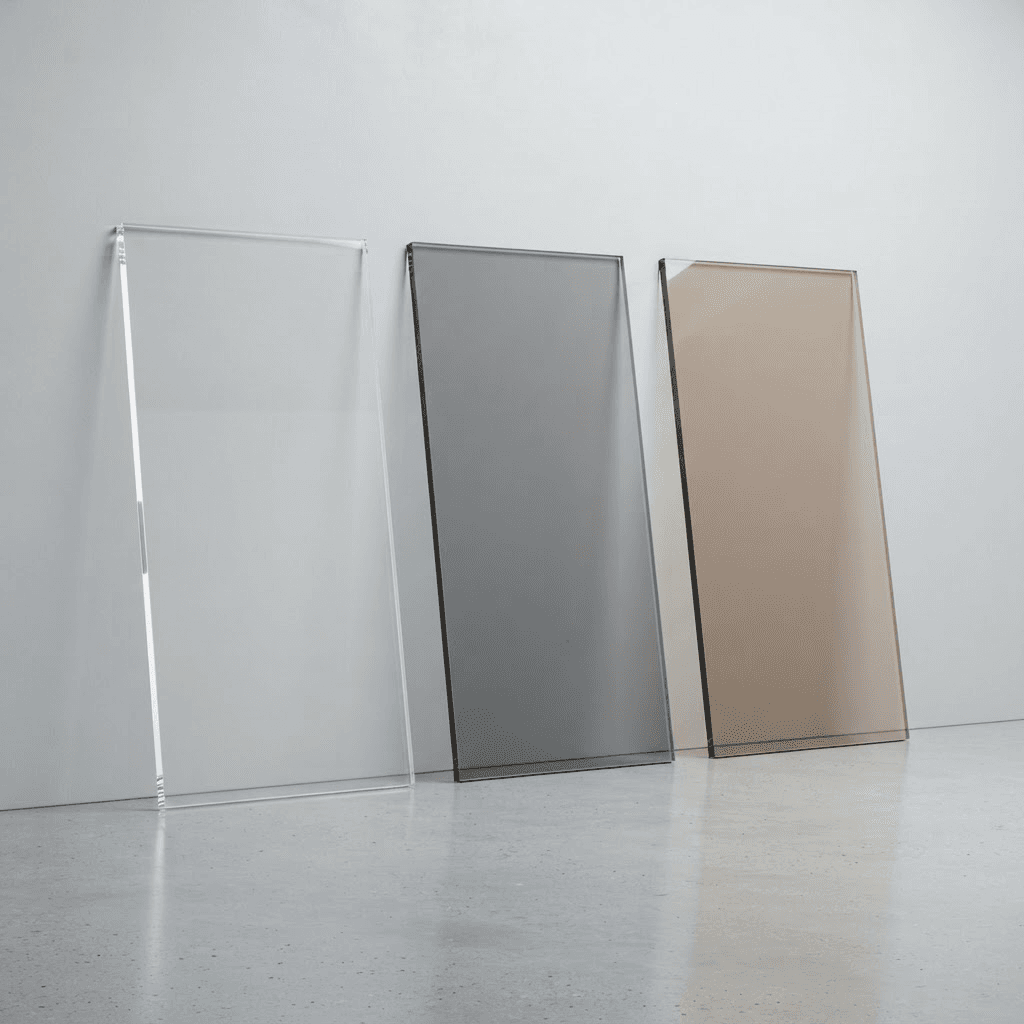
Solid polycarbonate sheet is a rigid, single-layer thermoplastic panel that is clear, tinted, or opaque and used where high impact resistance and light weight matter more than raw cost. It is roughly 200–250 times more impact-resistant than glass, about half the weight, and holds up to extreme temperature swings without becoming brittle. In Canada, it's the standard material for security glazing, skylights, machine guarding, greenhouse panels, and cold-climate roofing.
Quick Answer
| Impact strength vs. glass | ~200–250x stronger |
| Impact strength vs. acrylic | ~20–30x stronger |
| Weight vs. glass | ~50% lighter |
| Light transmission (clear) | ~82–90% |
| Standard thickness range | 1.5 mm – 25 mm |
| Operating temperature range | approx. −40°C to 120°C |
| UV resistance | Yes, with co-extruded UV layer |
| Cold-bendable on-site | Yes |
What Makes Polycarbonate Different From Acrylic and Glass?
Polycarbonate is an engineering-grade thermoplastic — the same resin family long associated with brand names like Lexan and Makrolon — while acrylic is a cast or extruded plastic and glass is a mineral silicate. The practical difference comes down to impact behaviour: glass and acrylic shatter into sharp fragments under stress, while polycarbonate flexes and absorbs the impact instead of fracturing. That's why it's the default choice for machine guards and glazing in high-vandalism or high-wind-load environments, including many Canadian building requirements for impact-rated glazing in schools and public facilities.
How Strong Is Solid Polycarbonate Sheet, Exactly?
“Virtually unbreakable” is marketing language — the useful number is the Izod impact strength rating, which measures how much energy a material absorbs before it fractures.
| Material | Relative impact strength | Typical behaviour under impact |
|---|---|---|
| Annealed glass | 1x (baseline) | Shatters into sharp shards |
| Cast acrylic (PMMA) | ~8–10x glass | Cracks, can shatter at low temps |
| Solid polycarbonate | ~200–250x glass | Deforms/dents, rarely fractures |
This is also why polycarbonate is favoured for machine guarding under most industrial safety practices, where acrylic is often explicitly disallowed — acrylic's brittleness at low temperature is a documented failure mode, which matters for anything installed outdoors in a Canadian winter.
What Are the Key Features of Solid Polycarbonate Sheet?
Impact strength
Up to 250x stronger than glass and 20–30x stronger than acrylic. Dents or scratches under extreme force rather than shattering.
Light transmission
Clear grades typically transmit 82–90% of visible light, close to glass; tinted grades trade transmission for privacy or solar control.
Weight
About half the weight of glass at equal thickness, reducing structural framing needs and installation labour.
Temperature performance
Stable from roughly −40°C to 120°C without becoming brittle — a meaningful edge over acrylic in Canadian winters.
UV resistance
Standard sheets ship with a co-extruded UV-inhibiting layer to prevent yellowing; sheets without it degrade faster in direct sun.
Fabrication
Can be cut, drilled, routed, and cold-bent on-site into curved canopies or arched roofing without heating equipment.
What Thickness Options Are Available?
Across the industry, solid polycarbonate sheet is manufactured from about 1.5mm up to 25mm, and the right thickness depends on span, wind/snow load, and impact-resistance requirements rather than cost alone.
| Thickness | Typical weight | Common uses |
|---|---|---|
| 1.5–3 mm | ~1.8–3.6 kg/m² | Signage, display glazing, light machine guards |
| 4.5–6 mm | ~5.4–7.2 kg/m² | Storm windows, security screens, greenhouse panels |
| 8–10 mm | ~9.6–12 kg/m² | Skylights, walkway canopies, carports |
| 12–16 mm | ~14.4–19.2 kg/m² | Riot shields, vandal-resistant glazing, enclosures |
| 19–25 mm | ~22.8–30 kg/m² | High-security glazing, structural applications |
Weights are approximate for clear solid sheet at standard density (~1.2 g/cm³); confirm exact figures against a manufacturer's datasheet before specifying a structural application.
What Is Solid Polycarbonate Sheet Used For?
Safety & security
Machine guards, vandal-resistant panels, and detention glazing rely on polycarbonate's resistance to shattering under repeated impact.
Architecture & roofing
Skylights, patio and walkway canopies, carports, and greenhouse glazing use polycarbonate for its light weight and ability to be cold-bent into curved roof profiles.
Industrial & institutional
Equipment enclosures, viewing windows on processing lines, and school or transit glazing where impact resistance is a specification requirement.
Residential & DIY
Storm door inserts, greenhouse panel replacement, and custom workshop jigs or guards, typically in the 3–6 mm range for hand tools and standard fasteners.
Solid vs. Multiwall Polycarbonate: What's the Difference?
These two are often confused, but they're built for different jobs.
| Solid polycarbonate | Multiwall polycarbonate | |
|---|---|---|
| Structure | Single dense layer | Twin/triple-wall with internal ribs (air gaps) |
| Weight | Heavier per m² | Lighter per m² |
| Insulation value | Low | Higher (air gaps trap heat) |
| Impact strength | Higher | Slightly lower |
| Best for | Security glazing, machine guards, viewing panels | Greenhouse roofing, skylights needing insulation |
If the application needs maximum impact resistance or optical clarity in a viewing panel, solid is the right call — and it's what we stock and cut to size. If it's roofing or glazing where winter heat loss is the bigger concern, multiwall usually wins on total cost; feel free to contact us and we'll point you in the right direction even though we don't stock multiwall ourselves.
How Do You Cut, Drill, and Install Solid Polycarbonate Sheet?
Polycarbonate fabricates like a tougher version of acrylic, with a few rules that prevent cracking:
- 1
Cutting: Use a fine-tooth carbide blade (10+ teeth per inch) at a moderate speed. Keep the protective film on until final install to prevent scratching.
- 2
Drilling: Use drill bits designed for plastics, ease off feed pressure near the exit point, and drill holes at least 3x the fastener diameter to allow for thermal expansion.
- 3
Fastening: Never fasten tight to the frame — polycarbonate expands and contracts more than glass with temperature swings. Use oversized holes with grommets or rubber washers.
- 4
Cold-bending: For curved installs, bend gradually to no less than roughly 150–175x the sheet thickness as a minimum radius; forcing a tighter bend risks stress-cracking.
- 5
UV side orientation: Sheets with a co-extruded UV layer are usually marked on the protective film — that side must face outward, or the sheet will yellow prematurely.
Frequently Asked Questions
Is polycarbonate sheet the same as acrylic?
No. Both are clear plastics, but polycarbonate is far more impact-resistant and stays flexible in cold temperatures, while acrylic offers better scratch resistance and slightly higher clarity at a lower cost.
How long does solid polycarbonate sheet last outdoors?
Sheets with a co-extruded UV-resistant layer typically hold their clarity and impact strength for 10-15+ years outdoors; uncoated sheets yellow and weaken significantly faster under direct UV exposure.
Can solid polycarbonate sheet be bent without heat?
Yes, this is called cold-bending and is commonly used for curved canopies and arched roofing, provided the bend radius stays within the manufacturer's recommended minimum, roughly 150 to 175 times the sheet thickness.
Is polycarbonate sheet bulletproof?
Standard solid polycarbonate is highly impact- and shatter-resistant but is not bullet-resistant at typical thicknesses. Bullet-resistant glazing uses laminated polycarbonate assemblies engineered and tested to specific UL 752 or similar ratings.
Does polycarbonate sheet yellow over time?
Only if it lacks UV protection. Co-extruded UV-inhibiting layers are standard on quality sheet and are designed to prevent the yellowing that happens with unprotected polycarbonate or acrylic.
What is the difference between solid and multiwall polycarbonate?
Solid polycarbonate is a single dense layer built for maximum impact resistance and clarity, while multiwall has internal air-gap ribs that trade some impact strength for better thermal insulation, making it more common in greenhouse and skylight roofing.
Sources & Further Reading
- Izod Impact Strength Test (ASTM D256)
The industry-standard method referenced above for measuring how much energy a material absorbs before fracturing.
- UL 94 Flammability Testing
The standard behind the fire-performance ratings referenced for polycarbonate grades.
- Solid Polycarbonate Sheets in Canada: The Complete 2026 Buyer's Guide
Our in-depth guide covering pricing, thickness selection, standards, and installation for Poly-Sky solid sheet.
Ready to Get the Right Sheet for Your Project?
Browse Poly-Sky solid polycarbonate in stock, or get an exact-size cut priced instantly.