
Solid Polycarbonate Sheets in Canada: The Complete 2026 Buyer's Guide
Thickness, pricing, standards, and installation — everything solid polycarbonate sheet actually depends on, so you can spec it once and get it right.
Key Takeaways
- Solid polycarbonate is a single-layer, virtually unbreakable alternative to glass and acrylic used across greenhouses, machine guards, skylights, patio covers, and signage.
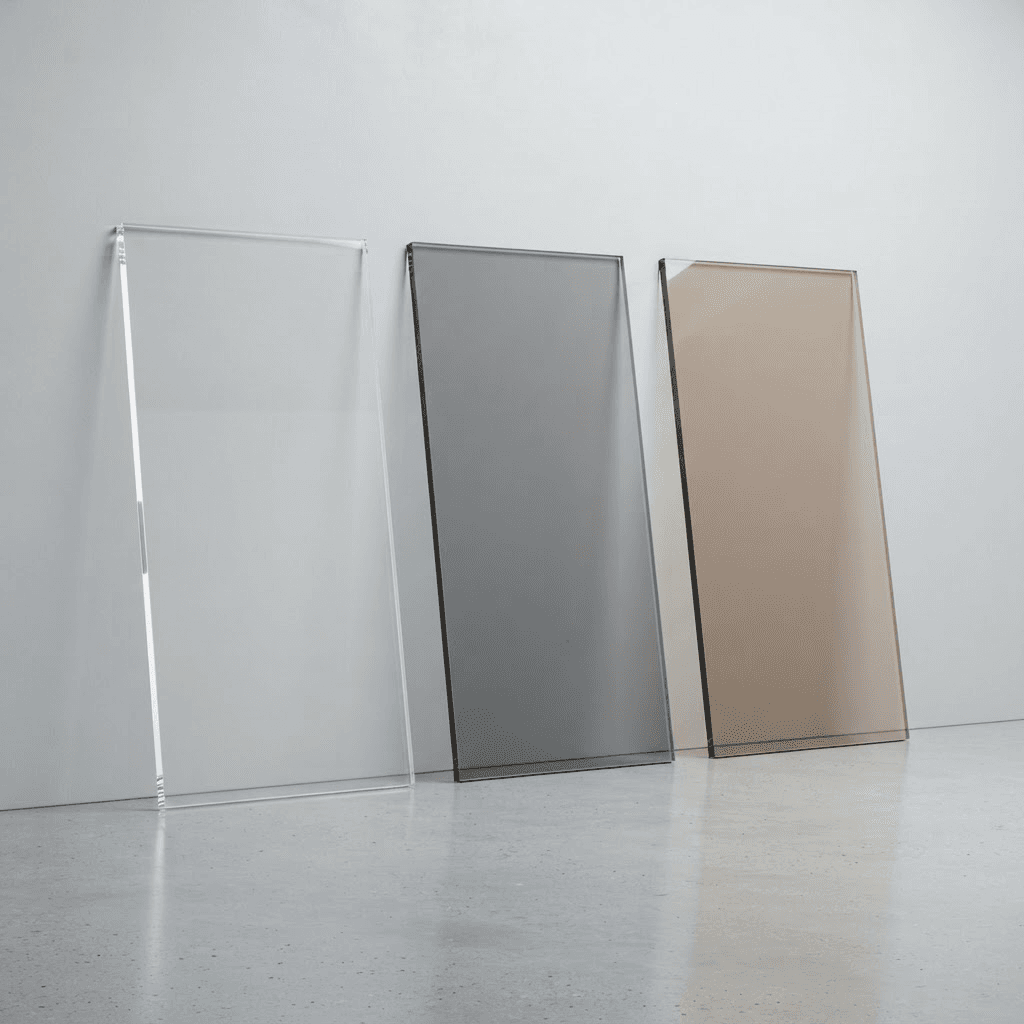
- Plastics Canada stocks Poly-Sky solid polycarbonate in 3mm, 4.5mm, and 6mm, in Clear, Smoky, and Bronze, with UV protection factory-coated on both sides.
- Pre-cut panels start at $4.99 CAD, and full 4x8 ft sheets are in stock in 3mm, 4.5mm, and 6mm. 3mm ships instantly online; 4.5mm and 6mm full sheets are ordered through our contact form. Any thickness in a custom size is priced instantly through the Cut-to-Size Calculator.
- Thickness should match the application — and for roof or overhead installs, it should be checked against local snow load, not chosen by price alone.
- Before buying from anyone, ask: what's the thickness tolerance, is the UV layer co-extruded or surface-coated, which side is it on, and is cut-to-size available.
- Every Poly-Sky sheet can be custom cut to your exact dimensions with ±1/8" tolerance and ships Canada-wide.
Why “Polycarbonate Sheet” Means Different Things to Different Buyers
Search “polycarbonate sheet” and you'll get results for three genuinely different products at three different price points: a flat solid panel for a machine guard, a hollow-channel insulating panel for a greenhouse roof, and a corrugated profile for a carport cover. They share one base resin and almost nothing else — different manufacturing process, different price per square foot, different tools to install, different failure modes if you pick the wrong one.
This guide is about solid sheetspecifically — the format Plastics Canada stocks and cuts to size. If your project is a heated greenhouse roof where insulation matters more than raw clarity, you're looking at multiwall, which is a different product with different pricing; contact us and we'll point you toward it even though we don't stock it ourselves. Everything below applies to solid sheet: skylights, machine guards, signage, patio covers, sneeze guards, and anywhere clarity and impact resistance matter more than trapped-air insulation.
What Solid Polycarbonate Sheet Actually Is
Solid polycarbonate sheet is a single, continuous layer of clear (or tinted) polycarbonate resin — the same category of impact-resistant plastic used in machine guards, riot shields, and aircraft glazing, scaled down for construction and DIY use. Unlike glass, which shatters under impact, polycarbonate flexes and dents. That difference in how the material fails — deformation instead of fragmentation — is the entire reason polycarbonate has become the default glazing choice anywhere safety matters more than raw optical perfection.
| Format | Structure | Light transmission | Typical use |
|---|---|---|---|
| Solid sheet | Single flat layer | ~88% (clear) | Skylights, machine guards, signage |
| Multiwall | Hollow internal channels | ~50–80% | Heated greenhouses, conservatories |
| Corrugated | Thin wave-profiled sheet | 20–90% (tint dependent) | Pergolas, carports, low-cost covers |
Impact resistance
~250× glass, ~30× acrylic
Weight
About half the weight of glass
Light transmission
~88% for clear sheet
Temperature range
−40°C to 115°C
Which Project Are You Actually Solving For?
The right thickness and finish depends less on the material and more on what you're building.
Replacing a cracked skylight or entrance canopy
You need clear glazing that survives an impact — a dropped tool, hail, a branch — without shattering onto whoever's underneath. 4.5mm to 6mm is the usual range depending on span and local snow load.
Unheated patio cover, carport, or pergola roof
Clarity and weather resistance matter more than insulation since there's no heated interior to protect. 4.5mm is the common default.
Machine guarding on a shop floor
A safety application first, aesthetics a distant second. 6mm is typical for maximum-protection guard windows, though 3mm to 4.5mm covers many light-industrial applications — check your provincial OHS requirements before finalizing spec.
Signage backing or indoor light diffusion
3mm earns its keep here — lightest, cheapest, and easiest to cut, and impact resistance is rarely the deciding factor for an indoor sign panel.
Sneeze guards and retail barriers
Usually 3mm to 4.5mm depending on panel size — big enough to need some rigidity, but not exposed to weather or impact loads a roof would see.
Poly-Sky Solid Polycarbonate: What We Stock
Poly-Sky is Plastics Canada's own solid polycarbonate line — supplied and custom cut in-house, not a third-party import relabelled under our name.
| Thicknesses | 3mm, 4.5mm, 6mm |
| Colours | Clear, Smoky, Bronze |
| UV protection | Factory-coated, both sides |
| Cut tolerance | ±1/8" on custom sizes |
| Largest stocked panel | 24" x 48" (2×4 ft) — larger sizes via Cut-to-Size Calculator |
| Quote turnaround | Within 24 hours |
| Ships from | Vaughan, Ontario — Canada-wide delivery |
A note on terminology: you'll sometimes see “Lexan” used as a generic term for polycarbonate sheet, the way “Kleenex” gets used for tissue — even when the material isn't made by SABIC, the company that owns the Lexan trademark. Poly-Sky is our own polycarbonate line, not SABIC Lexan or Covestro Makrolon. Same base material category, our own supply chain and pricing.
2026 Pricing Guide
Pricing scales with size and thickness. Small pre-cut panels start at $4.99 CAD; our largest stocked pre-cut panel is 24" x 48". Full 4x8 ft sheets are in stock in 3mm, 4.5mm, and 6mm — 3mm checks out online instantly, while 4.5mm and 6mm full sheets are in stock but ordered through our contact form rather than the cart.
| Size | 3mm | 4.5mm | 6mm |
|---|---|---|---|
| 6" x 12" | $4.99 | $5.99 | $6.99 |
| 12" x 12" | $5.99 | $8.99 | $11.99 |
| 12" x 24" | $11.99 | $17.99 | $22.99 |
| 24" x 24" | $22.99 | $35.99 | $45.99 |
| 24" x 36" | $33.99 | $53.99 | $68.99 |
| 24" x 48" | $45.99 | $70.99 | $91.99 |
| 4' x 8' (full sheet) | $139.99 | In stock — order by contact | In stock — order by contact |
Prices shown are CAD for Clear; Smoky and Bronze may carry a modest premium. Custom dimensions in any thickness are priced instantly through the calculator below.
How to Choose the Right Thickness
| Thickness | Typical use | Notes |
|---|---|---|
| 3mm | Signage, light diffusion, indoor/sheltered use | Most economical, easiest to cut |
| 4.5mm | Greenhouses, skylights, patio covers, general outdoor use | Our best-seller |
| 6mm | Machine guards, safety glazing, high-impact commercial use | Maximum impact protection |
For roofs and overhead installations specifically: thickness needs to account for snow load, not just span. Under the National Building Code of Canada, the basic roof snow load factor is 0.8× the local ground snow load (dropping to 0.6× only for roofs fully exposed to wind). Ground snow load varies substantially by region — a milder southern-Ontario location can differ several times over from a heavier-snowfall region such as interior Quebec or parts of the Maritimes. Check your local ground snow load figures or consult your installer/engineer before finalizing thickness — this guide is general information, not a substitute for a local code check or professional sign-off on a load-bearing structure.
A practical rule if you're unsure: step up a gauge rather than down. Moving from 4.5mm to 6mm adds a modest amount per sheet — small insurance against a panel that deflects, ponds water, or fails an inspection.
Standards, UV Protection and What to Ask a Supplier
Not every sheet sold as polycarbonate in Canada is held to the same specification, and the differences don't show up until the sheet has been outside for a season or two.
Co-extruded vs. surface-coated UV protection
Co-extruded UV protection is molecularly bonded into the surface layer during manufacturing — it can't peel or wear off. Surface-coated protection is applied after manufacturing and degrades faster under weathering, cleaning, and abrasion.
Which side is protected
Standard solid sheet has UV protection on one side only. That side has to face the sun. A good supplier marks the protected side clearly on the masking film.
Machine guarding and workplace safety standards
Canadian employers generally need to demonstrate guarding meets requirements under CSA Z432 (Safeguarding of Machinery), with UL94 V-2 as a common flammability baseline. Ask your supplier directly whether their sheet is rated or certified — don't assume from marketing copy alone.
Solid Polycarbonate vs. Acrylic vs. Glass
| Property | Polycarbonate | Acrylic | Glass |
|---|---|---|---|
| Impact resistance | Very high — dents, ~30× acrylic | Moderate — can crack | Low — shatters |
| Weight | ~Half the weight of glass | Light | Heavy |
| Optical clarity | ~88% transmission | ~92% transmission | Highest |
| UV stability | Requires UV coating | Naturally UV-stable | Naturally UV-stable |
| Cold bending | Yes, without heat | No — requires heat | No |
| Best for | Safety-critical / high-impact | Display, signage | Standard glazing |
For overhead applications, the deciding factor is usually impact: acrylic is optically clearer and harder, but it cracks under impact and can get brittle in deep cold — which is why polycarbonate is the default for Canadian roofs, canopies, and skylights despite costing more per sheet. For a deeper breakdown, see our Polycarbonate vs. Acrylic guide.
Cutting, Drilling and Cold Bending
- 1
Choose the right blade
A circular saw with a fine-tooth carbide blade, or a jigsaw with a fine blade. Don't score-and-snap — polycarbonate is too tough to fracture cleanly at a score line.
- 2
Cut at a steady, moderate pace
Rushing the cut generates heat, which melts and re-fuses the material behind the blade, leaving rough edges and binding.
- 3
Drill oversized fastener holes
Oversize every fastener hole by 1–2mm beyond the bolt diameter. A tight hole can crack the sheet through seasonal temperature cycling.
- 4
Install with the UV-coated side facing the sun
Keep the protective masking film on through cutting and drilling — it marks which side is coated, so you don't have to guess.
- 5
Leave an expansion gap
Leave a 3–5mm gap at every frame edge to allow for thermal movement.
- 6
Cold bend if a curve is needed
Solid sheet can be cold-bent on site without heating equipment. Always test on an offcut first, and never force a bend past what the sheet accepts without resistance.
Avoid unplasticized PVC sealants, solvent-based adhesives containing MEK or acetone, and anything containing naphthas near the sheet — these can cause stress cracking that shows up weeks after installation. Use a polycarbonate-compatible, neutral-cure silicone for sealing and glazing.
Canadian Climate Considerations
Polycarbonate installed outdoors in Canada goes through real thermal cycling — winter lows well below freezing across most of the country, summer highs above 30°C in many regions. For a 4-foot-wide panel going through a 60°C seasonal swing, thermal expansion works out to roughly 5mm of dimensional change across the panel width — exactly why the 3–5mm frame gap and oversized fastener holes above aren't optional details.
Sealant selection matters in cold climates. Not every silicone performs down to -40°C. For any outdoor Canadian installation, specify a silicone rated for your expected low temperature. Cold-weather installation is fine, but plan for summer expansion — the panel is at its smallest dimensions when cold, so allowance for expansion matters regardless of the season you install in.
How to Tell Quality Polycarbonate From a Cheap Import
Before ordering from anyone — us included — ask these questions in writing:
What's the thickness tolerance? A sheet sold as 6mm that actually runs anywhere from 5.4mm to 6mm is a different product for load-bearing purposes than one held to a tight, stated tolerance.
Is the UV layer co-extruded or surface-coated, and which side is it on? Installing it UV-side-down (or with degraded coating) gets you a panel that yellows within a couple of years regardless of thickness.
Do they offer cut-to-size? Suppliers who cut to custom dimensions generally have more fabrication and application knowledge than an operation that only moves full sheets.
Can they answer these questions the same way twice? If the answer changes between a phone call and an email, that's worth noticing.
Frequently Asked Questions
What's the difference between 3mm, 4.5mm, and 6mm polycarbonate sheet?
Thickness determines impact resistance, rigidity, and price. 3mm suits indoor and light-duty applications, 4.5mm is the general-purpose outdoor choice for greenhouses and patio covers, and 6mm is for machine guards and high-impact commercial use.
How much does polycarbonate sheet cost in Canada in 2026?
At Plastics Canada, pre-cut panels start at $4.99 CAD, with pricing scaling by size and thickness up to our largest stocked panel at 24" x 48" ($45.99 in 3mm, $70.99 in 4.5mm, $91.99 in 6mm). Full 4x8 ft sheets are in stock in all three thicknesses — 3mm ships instantly online at $139.99 CAD, while 4.5mm and 6mm full sheets are in stock but ordered through our contact form rather than the online cart. Custom dimensions in any thickness are priced instantly through the Cut-to-Size Calculator.
Is polycarbonate better than acrylic for outdoor use?
For impact resistance, yes — polycarbonate significantly outperforms acrylic under impact and stays tougher in deep cold. Acrylic offers better optical clarity and scratch resistance, so the right choice depends on which property matters more for the project.
Does polycarbonate sheet yellow over time?
UV-coated polycarbonate resists yellowing for many years outdoors. Uncoated or poorly-coated sheet, or sheet installed with the UV side facing the wrong way, can yellow and degrade much faster under sun exposure.
Can I cut polycarbonate sheet myself?
Yes, with the right blade and steady technique it's a manageable DIY cut. A cut-to-size service is also available for exact dimensions with tighter tolerance.
Is Lexan the same thing as polycarbonate?
Lexan is a specific brand name owned by SABIC for polycarbonate resin, but it's commonly used as a generic term for polycarbonate sheet in general. Poly-Sky is Plastics Canada's own polycarbonate line, not SABIC Lexan or Covestro Makrolon.
What thickness do I need for a greenhouse roof or machine guard?
4.5mm is the best-selling thickness for greenhouses and general outdoor glazing. Machine guards commonly run 3mm to 6mm depending on the impact energy involved. For roof applications, local snow load requirements should also be checked.
How do I know if a supplier's polycarbonate is actually good quality?
Ask whether the UV layer is co-extruded or surface-coated, which side it's on, what the thickness tolerance is, and whether cut-to-size is available. A supplier who answers all four clearly and consistently is a good sign.
Does polycarbonate meet Canadian machine guarding standards?
Machine guarding in Canada is generally assessed against CSA Z432 (Safeguarding of Machinery), and guard materials are often expected to carry a UL94 flammability rating such as V-2. Buyers should confirm directly with a supplier whether a specific sheet is rated or certified before relying on it for a documented safety application.
Do you ship polycarbonate sheet across all of Canada?
Yes, shipping is available nationwide from our Vaughan, Ontario warehouse, with delivery in 2-5 business days to most Ontario cities and Canada-wide shipping to all provinces.