
Custom Cut-to-Size Polycarbonate Sheet: The Complete 2026 Guide
Custom cut-to-size polycarbonate is polycarbonate stock cut to your exact width and height instead of sold in fixed panel sizes. This guide covers everything that decision actually depends on — thickness, tolerance, color, price, and the ordering process — so you can order once and get it right.
Why Order Cut-to-Size Instead of a Full Sheet
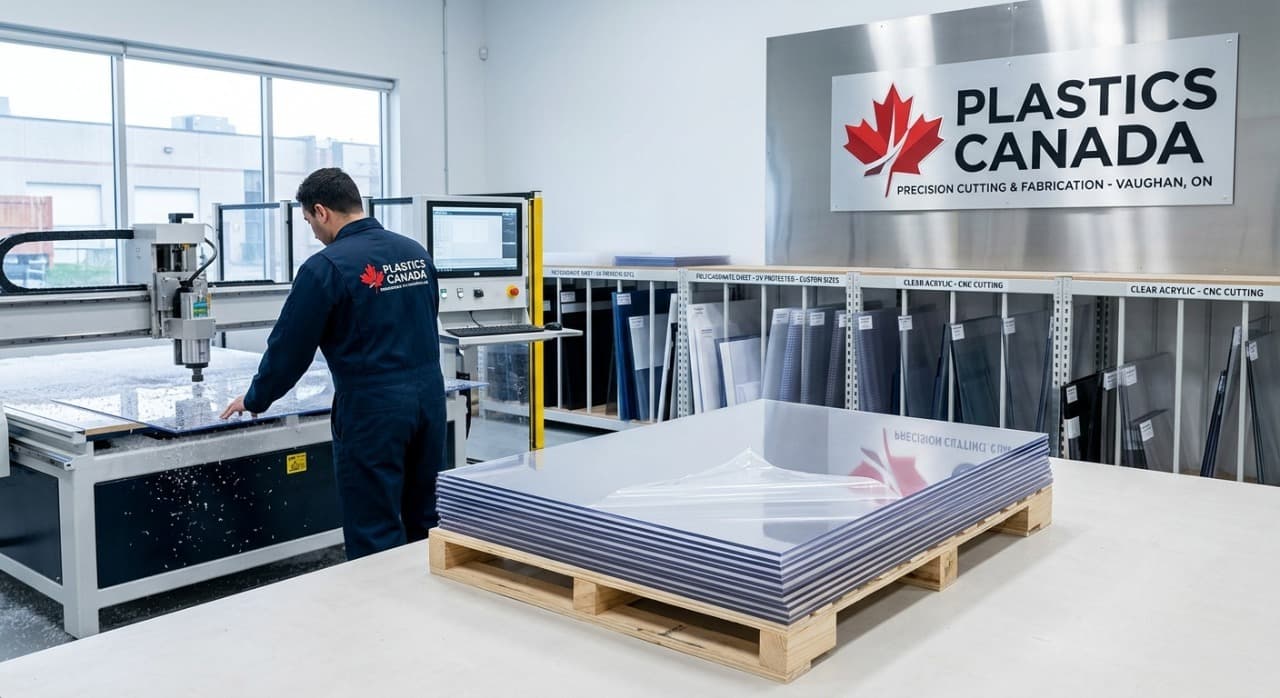
A standard polycarbonate sheet ships in fixed dimensions — 4×8', 4×12', 4×16' being the most common. That works fine if your project happens to need a full sheet. Almost none do. A greenhouse side panel, a machine guard, a storm window insert, a sneeze guard — these all need a specific width and height, usually smaller than a full sheet, and usually not a clean fraction of one.
Cutting it yourself is possible but has real failure modes: polycarbonate work-hardens along a cut edge, and a rough or overheated cut leaves micro-fractures that turn into stress cracks months later, often starting at a mounting hole. Buying pre-cut to your exact size removes that risk and avoids paying for material you'll throw away as offcuts.
No offcuts wasted
Pay only for what you need
No field cutting risk
Avoid stress cracks from improper cuts
Drops straight in
Sized to your opening, not a full sheet
How Custom Cutting Actually Works
Most cut-to-size polycarbonate is produced with a straight blade cut, not a laser or router. This matters for two reasons.
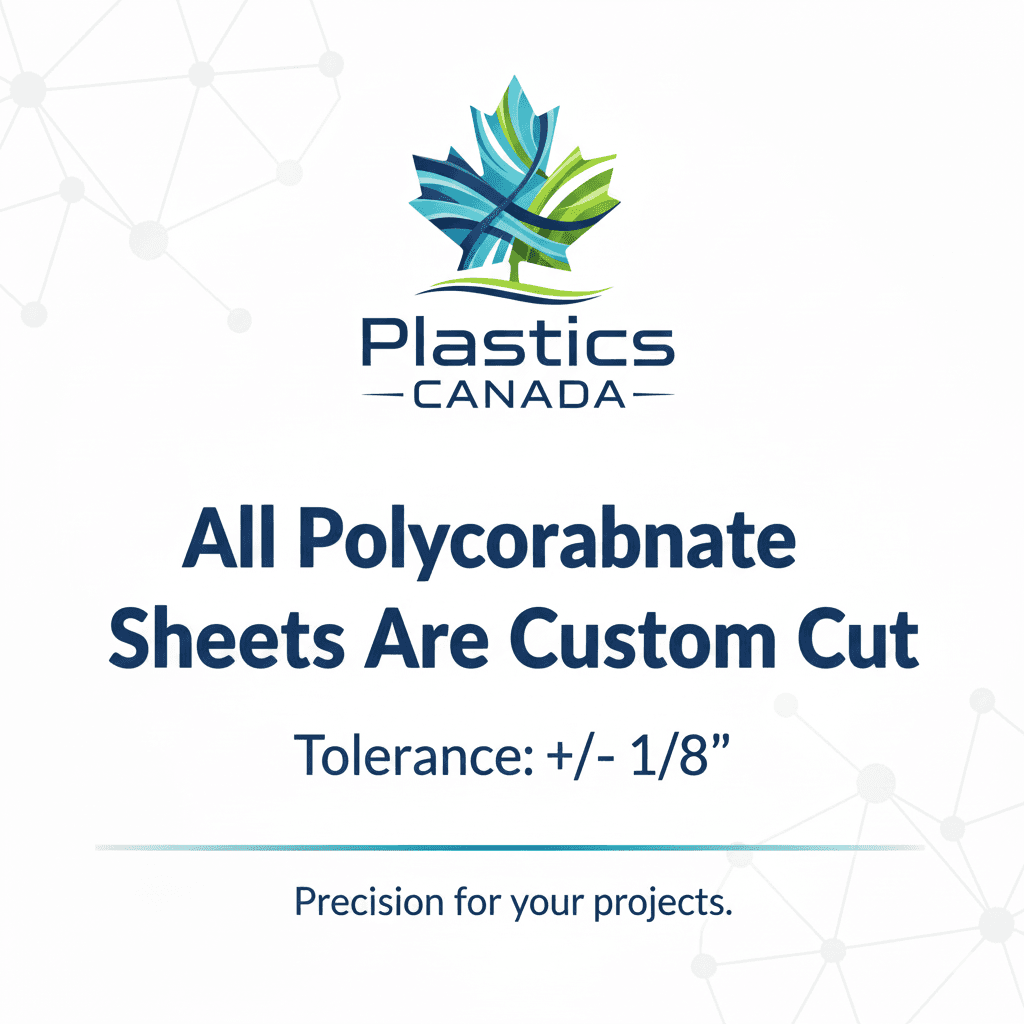
Tolerance. Blade cutting holds to about ±1/8" (roughly 3mm) of your specified dimension. That's tight enough for the overwhelming majority of glazing, guarding, and DIY applications — but never design with zero clearance.
Edge finish. A blade-cut edge is functional but not polished — fine for anything that gets framed, taped, or fitted into a channel. If you need a jewelry-display-grade polished edge, ask about flame-polishing separately.
Laser cutting and CNC routing offer tighter tolerances and complex shapes, but at meaningfully higher cost and lead time. They're the right call for precision parts or non-rectangular geometry — not for a standard rectangular panel.
Solid vs. Multiwall (Twin-Wall) Polycarbonate
This guide covers
Solid polycarbonate sheet
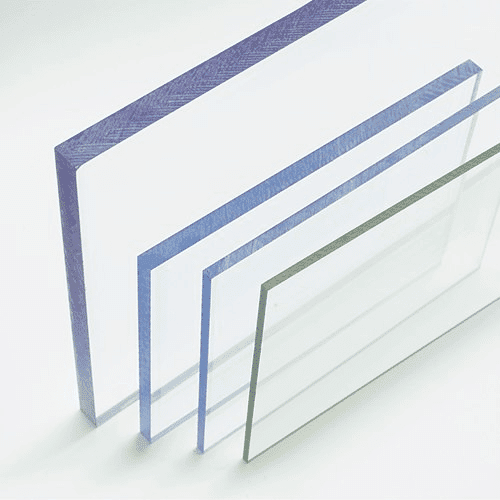
A single flat slab, available in 3mm, 4.5mm, and 6mm. The right choice for glazing, machine guards, sneeze guards, window replacement, signage, and any application where flat structural strength matters most.
Different product
Multiwall (twin-wall) polycarbonate
A ribbed panel with two layers separated by internal air channels. Lighter with better insulating value — the standard for full greenhouse roofing and walls where insulation matters more than flat clarity. Not what cut-to-size service covers.
Choosing the Right Thickness
Thickness is the single decision that affects strength, weight, and price the most.
| Thickness | Typical Use Case | Notes |
|---|---|---|
| 3mm (0.118") | DIY projects, interior partitions, display panels, lightweight glazing | Lightest and most economical; not recommended for large unsupported spans |
| 4.5mm (0.177") | Greenhouse panels, cold frames, medium-duty glazing, patio covers | The middle ground most residential projects land on |
| 6mm (0.236") | Machine guards, security barriers, safety glazing, heavy-duty commercial panels | The step up when a panel needs to take real impact or span a larger area |
When in doubt, step up. The cost difference between 3mm and 4.5mm on a typical panel is small relative to re-ordering after a cracked panel. Spec to your impact requirement first, treat cost as secondary.
Choosing a Color: Clear, Smoke, or Bronze
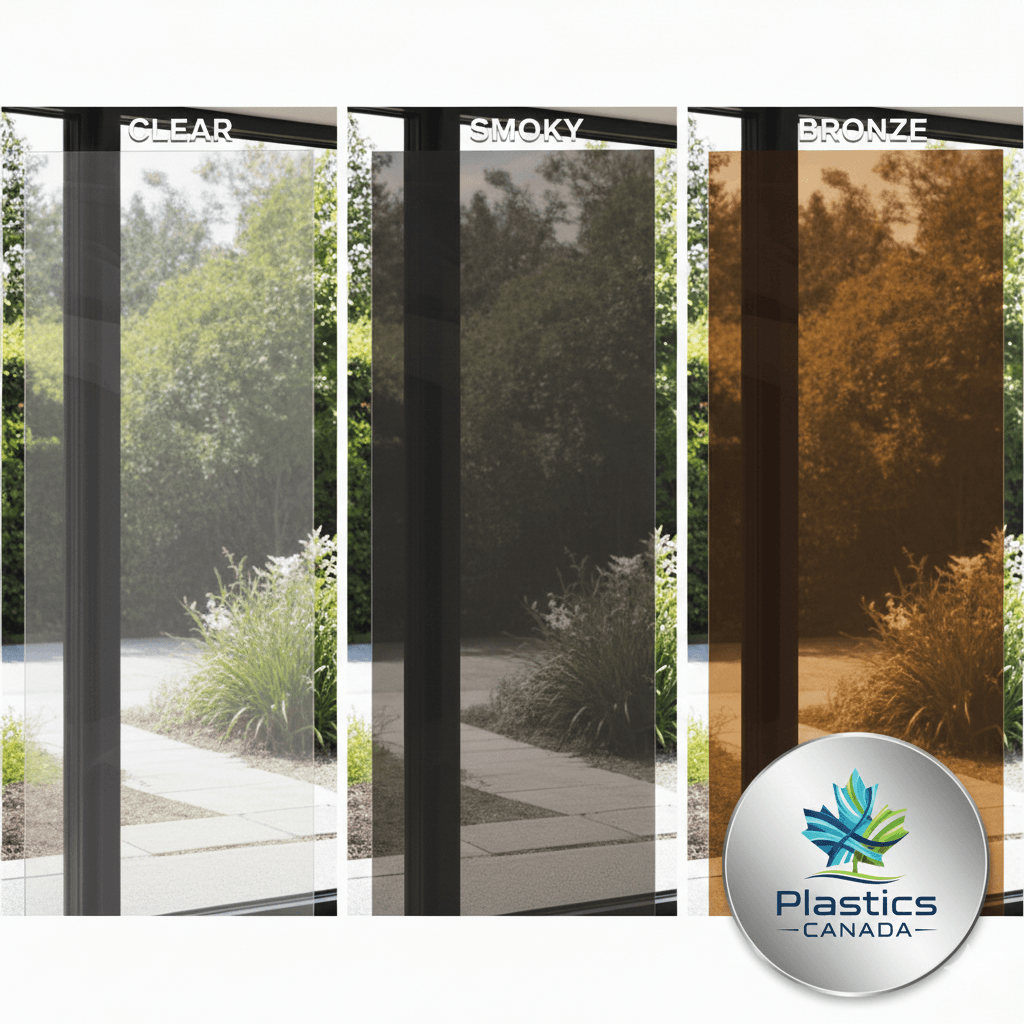
Clear
Transmits the most light (up to 88%) and is the default for anything where visibility matters — windows, display panels, greenhouse glazing, skylights.
Smoke / Gray
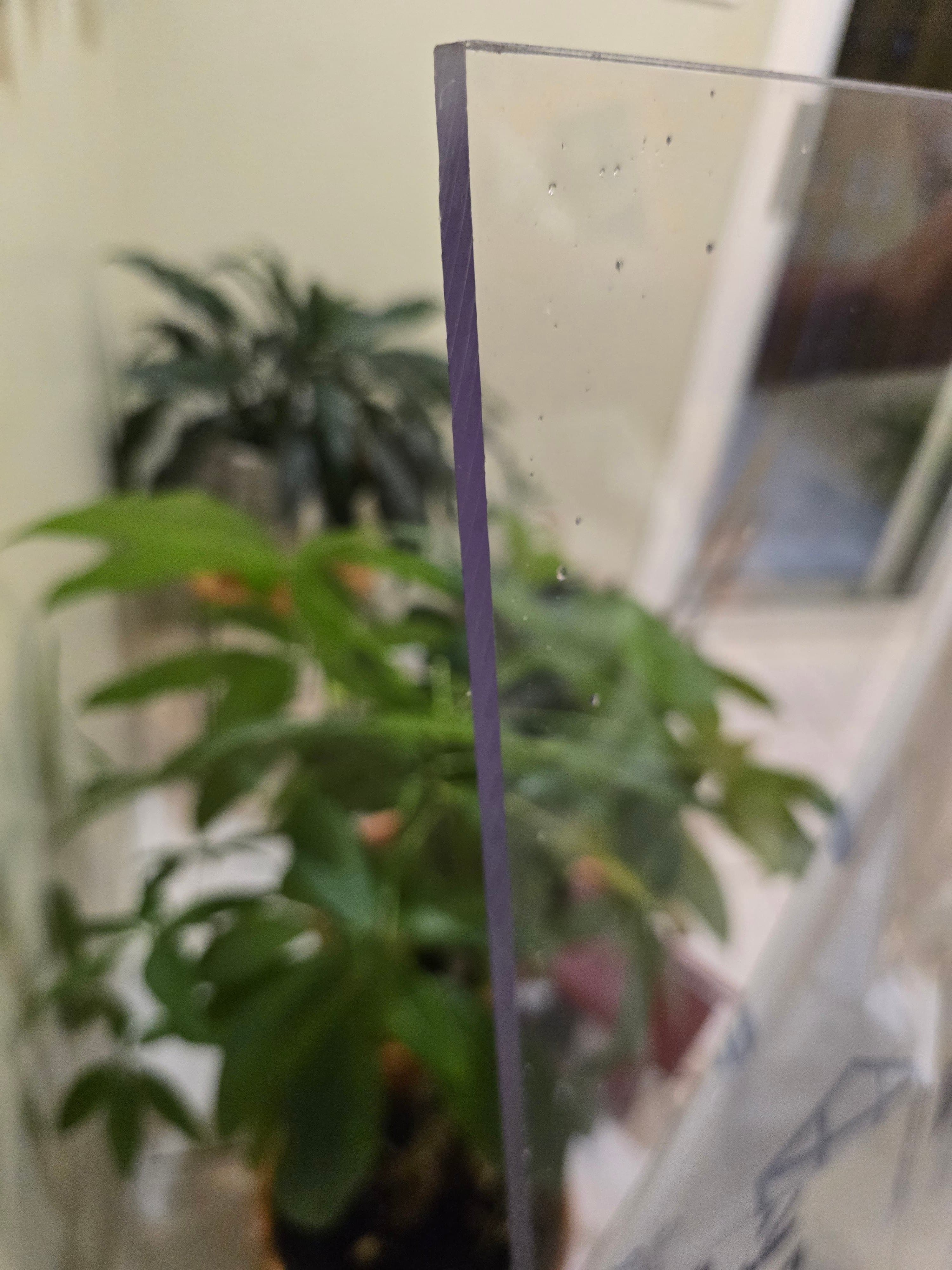
Cuts glare and adds privacy while still allowing visibility — common for privacy screens, patio dividers, and automotive applications.
Bronze
Warm tint that meaningfully reduces solar heat gain — the common choice for patio covers and sun-facing architectural glazing.
None of the three tints change the sheet's impact resistance or tolerance — the choice is purely about light transmission, privacy, and heat management.
Understanding Tolerance: What “Cut to Size” Actually Guarantees
When you order a panel cut to, say, 24" × 36", a standard ±1/8" tolerance means the finished piece could come in anywhere from 23⅞" to 24⅛" on each dimension. For the majority of applications that's a non-issue — for a few, it isn't.
Hard fixed opening with no give
Order your panel slightly undersized — typically ¼" smaller per dimension — rather than ordering to the exact opening measurement.
Mounting with screws through the sheet
Drill holes oversized relative to the screw diameter (roughly 1.5–2× the screw shank) to allow for thermal expansion — a snug hole is a common cause of cracking months after installation.
Exact-to-the-hair precision required
Ask about laser or CNC cutting instead of standard blade cutting — tighter tolerances are available at higher cost.
How to Measure for a Custom Cut Panel
- 1
Measure in at least two places per dimension
Top and bottom for width, left and right for height. Openings in older construction are rarely perfectly square — design around the smallest usable dimension.
- 2
Decide your clearance
For a panel that sits inside a channel or frame, subtract roughly ¼"–⅜" per side from your opening measurement to allow for the rebate depth and installation movement.
- 3
Account for thermal expansion
Leave a small gap at the edges if the panel will see direct sun or wide seasonal temperature swings — never cut to a flush zero-clearance fit.
- 4
Order your adjusted number, not your raw opening
The measurement you submit should already have your clearance built in.
- 5
When in doubt, order a hair smaller
A panel that's an eighth of an inch smaller than the opening is a five-minute fix. A panel that's oversized has to be cut down — which usually means starting over.
Polycarbonate vs. Acrylic for a Cut-to-Size Project
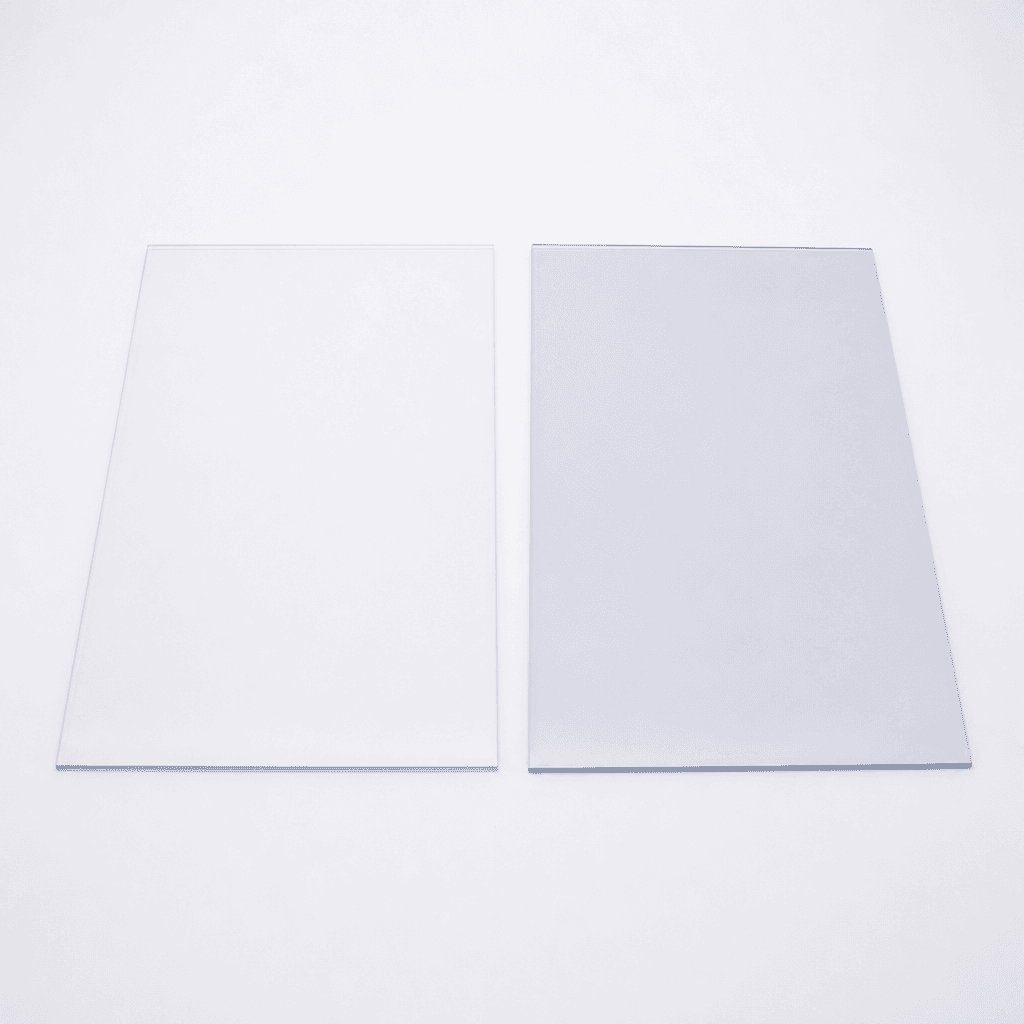
Both cut cleanly to size and are common choices for the same applications, but they solve different problems.
If the application involves any real risk of impact — a machine guard, a storm panel, anything protecting people or equipment — polycarbonate is the safer spec. If the application is primarily display, signage, or indoor use where scratch resistance and optical clarity outweigh impact, acrylic is often more cost-effective.
| Property | Polycarbonate | Acrylic |
|---|---|---|
| Impact resistance | Excellent — ~250× glass, 30× acrylic | Good — ~10–17× glass |
| Behavior under impact | Dents or flexes rather than shattering | Can crack or shatter |
| Optical clarity | Excellent (~88%) | Slightly higher (~92%) |
| Scratch resistance | Moderate (can be coated) | Good |
| UV resistance | Requires co-extruded UV coating | Naturally UV-stable |
| Cost | Higher per sheet | Generally lower |
What Affects the Price of Custom Cut Polycarbonate
Total area
Price scales with square footage — ordering slightly-too-large just in case isn't free.
Thickness
6mm uses roughly double the raw material of 3mm for the same footprint, and the price reflects that.
Color
Clear is typically the baseline; tinted colors can carry a modest premium depending on the supplier.
Quantity
Ordering multiple identical panels usually brings the per-unit cost down vs. one-off pricing.
How to Order Custom Cut Polycarbonate Sheet Online
- 1
Choose your thickness
Based on your application — 3mm for lightweight, 4.5mm for most residential, 6mm for machine guards and high-impact use.
- 2
Choose your color
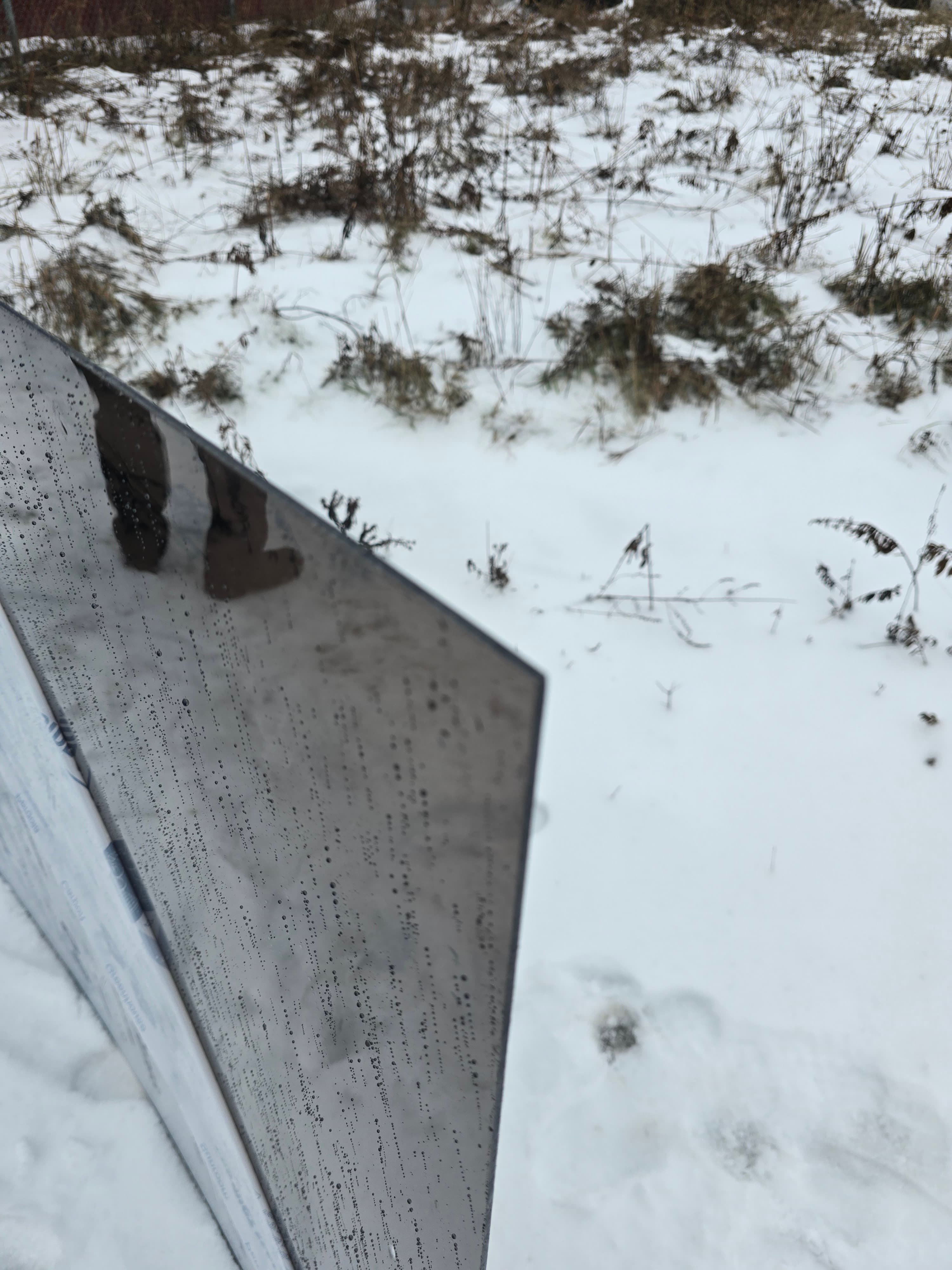
Clear, smoky, or bronze — purely about light transmission, privacy, and heat management.
- 3
Enter your finished dimensions
The size you've already adjusted for clearance, not your raw opening measurement.
- 4
Review your instant quote
Includes a live shipping estimate to your address — the most accurate price for your specific project.
- 5
For non-standard requirements
Unusual dimensions, bulk quantities, or non-rectangular shapes — request a custom quote directly; most get a response within 24 hours.
Common Applications
Residential
- Storm & window panel replacement
- Patio & pergola covers
- Greenhouse side panels
- Skylight replacement
- Deck railing infill
Commercial & Industrial
- Machine guards & enclosures
- Safety & security glazing
- Retail displays
- Warehouse partitions
- Sneeze guards
DIY & Custom Fabrication
- Home improvement projects
- Protective panels
- Custom enclosures
- Signage substrates
- Cold frames
Installation & Handling Tips
Leave the protective film on
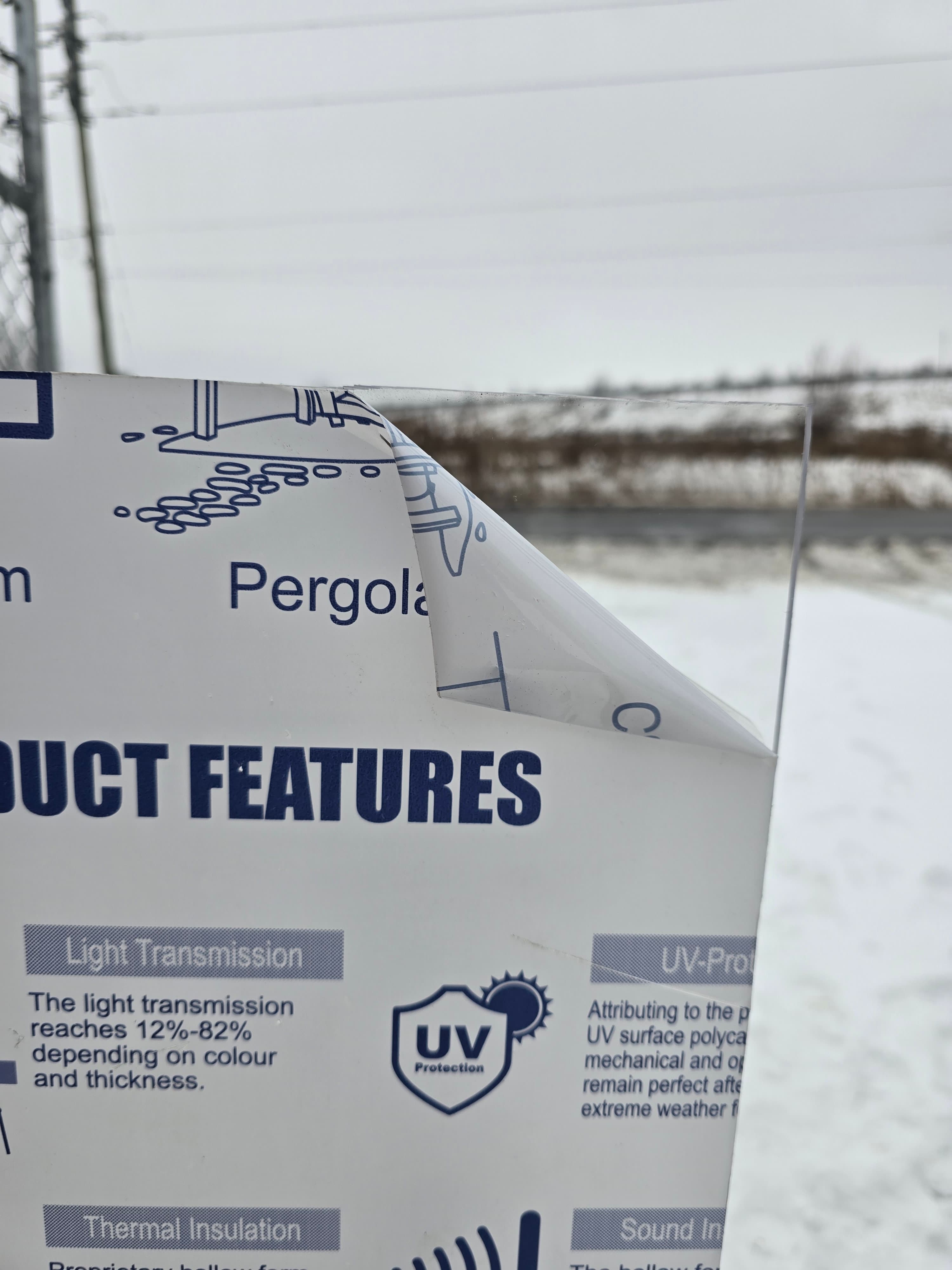
Until the panel is fully mounted — it protects against scratches during handling and cutting of additional holes.
Drill, don't force
Use a standard drill bit at moderate speed, and always drill oversized mounting holes to allow for thermal movement.
Support the full panel during handling
Polycarbonate is lightweight but can flex on larger sizes — carrying a large sheet by one edge risks a stress crack propagating from a hole or cut edge.
Clean with mild soap and a soft cloth
Avoid ammonia-based or abrasive cleaners, which can degrade the UV coating over time.
Expect seasonal expansion and contraction
This is normal and accounted for by proper installation clearance — it's not a sign of a defective panel.
Frequently Asked Questions
What does "cut-to-size" mean for polycarbonate sheet?
It means the sheet is cut to your specified width and height instead of sold only in fixed panel sizes, typically with a standard tolerance of about ±1/8" using a blade-cut process.
What is the standard tolerance on custom cut polycarbonate?
Most cut-to-size polycarbonate holds to roughly ±1/8" (about 3mm) per dimension with standard blade cutting. Tighter tolerances are available through laser or CNC cutting for applications that require them.
Can I cut polycarbonate sheet myself at home?
Yes, with the right blade and technique, but a rough or overheated cut can leave micro-fractures that develop into stress cracks later — particularly around drilled holes. For most projects, pre-cut-to-size avoids this risk entirely.
What thickness of polycarbonate should I use?
3mm suits lightweight DIY and interior applications, 4.5mm covers most greenhouse and medium-duty projects, and 6mm is the standard for machine guards and high-impact safety glazing. When unsure, size up rather than down.
How much does custom cut-to-size polycarbonate cost?
Price scales primarily with total area and thickness, with smaller premiums for tint and quantity. Small pre-cut panels start around $4.99 CAD; use the cut-to-size calculator for an instant price on your exact dimensions.
Is polycarbonate or acrylic better for a custom-cut project?
Polycarbonate is the stronger, more impact-resistant choice and the safer spec for anything protecting people or equipment. Acrylic offers slightly better clarity and scratch resistance at a lower cost, making it a good fit for display and indoor signage.
Do you cut polycarbonate into custom shapes like circles or curves?
Standard cut-to-size service covers rectangular panels to your exact dimensions. Non-rectangular shapes or curved cuts require a different process — reach out with your specifications for a custom quote.
Is custom cut polycarbonate sheet suitable for greenhouses?
Solid polycarbonate sheet works well for greenhouse windows, cold frames, and side panels where clarity and impact resistance matter most. For full greenhouse roofing, multiwall polycarbonate is the more common choice due to its insulating properties.
